





Finding Your Perfect Work: A Collector’s Guide to Acquiring a Classical Marble Bust
According to a recent study by University College London, looking at a beautiful work of art affects the brain in the same way as falling in love. But what if you are considering acquiring a significant piece—such as a 19th-century marble bust—and are unsure how to make the final decision? Whether you are a seasoned collector or a first-time buyer, understanding how to evaluate a work of classical sculpture is key to finding a piece you will cherish for a lifetime.
If you have already made your decision and completed the purchase, be sure to read our post on how to enjoy and care for your new artwork.
How to Start
- Reading and Understanding the Listing
- Assessing the Quality of the Sculpture
- Deciding on Placement


Reading the Listing
Every artwork page contains a wealth of useful information. Here is what to pay particular attention to when considering the acquisition of a classical bust or sculpture.
First, check the dimensions. A marble bust is not a painting; it occupies physical space in three dimensions. Note the height, width, and depth of the piece. Compare these measurements to the intended surface—be it a console table, a pedestal, or a bookshelf. To visualize how the work will look in your space, use a tape measure and a bit of imagination. For a more immediate sense of scale, many listings also include a “View in Room” feature.
Once you understand the size, check the shipping details. Marble is heavy. A listing will often specify whether the piece is shipped in a wooden crate (ideal for large, heavy sculptures) or a reinforced box. Look for information about packaging. If the sculpture arrives ready to place, you can enjoy it immediately. If it requires a custom pedestal or mounting, factor that into your timeline.
Finally, and importantly, understand the price. The listed price typically includes shipping but may not include customs duties or taxes, depending on your location and where the work is shipping from. You can always add the work to your cart and proceed to the checkout stage to calculate the total order amount after entering your shipping address. For significant pieces, remember that you may have the option to make an offer. We recommend submitting an offer around 80–85% of the asking price if you are seeking a respectful negotiation with the seller or gallery.
Next, read the description carefully. This section is invaluable. A well-researched listing will provide not only the dimensions and material (“white marble”) but also crucial historical context.
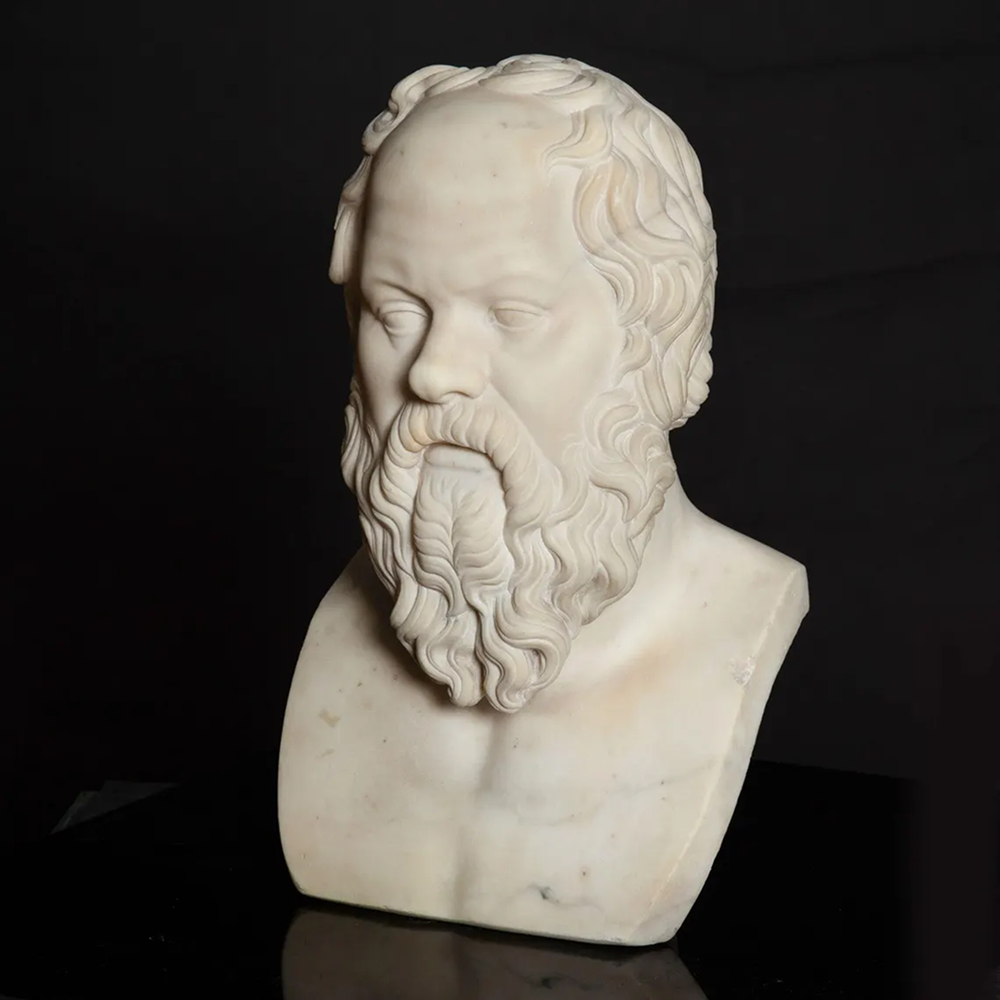
For a bust like this example of Socrates, the description should cover:
- The Prototype: Is it based on a known ancient original (e.g., the Roman bust from the Louvre)?
- The Date and Style: Does it belong to the Grand Tour era, the 19th-century Academic period, or is it a later Neoclassical revival?
- The Artist: Is the sculptor identified? If not, is the piece attributed to a specific school or circle?
- Condition: Pay close attention to this section. Terms like “old, oxidized patina,” “minor chips,” or “discoloration” are typical for antique marble and speak to the object’s history. A “beautiful presentation” note indicates the piece is display-ready despite its age.
Read the artist’s name and location—familiarize yourself with their profile. And if you ever need more information about a work you like, do not hesitate to contact our curators, who are happy to advise you throughout the purchasing process.
Assessing Quality
- Material: Look for listings that specify “carved from a single block of white marble.” This indicates traditional, high-quality execution, as opposed to composite or cast pieces. The type of marble (Carrara, for example) can also influence value and appearance.
- Craftsmanship: Examine the carving details. In a superior work, you will see a deliberate contrast between finishes. Look for smoothly polished skin surfaces against deeply carved, textured hair and beard. The presence of undercutting (deep carving that creates shadow) and the absence of pupils in the eyes (adhering to classical tradition) are markers of academic refinement.
- Condition: Do not shy away from age-related wear. An old, oxidized patina is often a sign of authenticity and age. Minor chips, nicks, or discoloration are expected in antiques. The key is to ensure the damage does not compromise the overall composition or facial features. A clean, well-documented condition report is the hallmark of a reputable listing.
Deciding on Placement
A marble bust is a statement piece. It requires thoughtful placement to be fully appreciated.
- Height and Viewing Angle: Busts are designed to be viewed at or slightly below eye level. A pedestal, console table, or mantelpiece is ideal. Ensure the surface can bear the significant weight of solid marble.
- Lighting: As noted in the description of the Socrates bust, the interplay of texture and shadow is a key feature of the carving. Position the sculpture to receive natural light from the side, or use directional spotlights to emphasize the depth of the curls and the contours of the face.
- Condition: Do not shy away from age-related wear. An old, oxidized patina is often a sign of authenticity and age. Minor chips, nicks, or discoloration are expected in antiques. The key is to ensure the damage does not compromise the overall composition or facial features. A clean, well-documented condition report is the hallmark of a reputable listing.
Finding the perfect work of art is a journey. Whether you are drawn to the intellectual gravity of a philosopher like Socrates or the refined aesthetics of 19th-century academic sculpture, taking the time to understand the listing, assess the quality, and envision the piece in your home will ensure you make a choice you will love for years to come.